

The Diamond Shake-Out
How the diamond industry is finally constraining supply
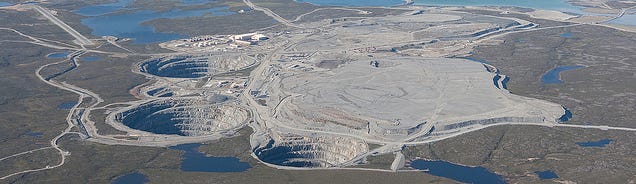
For some time, it has been clear that the crisis in consumer demand for natural diamonds would lead to a major re-set in mine production. If phase one of the response was mild cost cutting and new marketing initiatives, phase two was always going to be capitulation and major supply cuts. That time has now arrived. Canada, as the highest cost region, has borne the brunt of the most recent cuts, with RIO Tinto’s Diavik closing, albeit planned, Burgundy’s Ekati mine announcing premature closure due to receivership and Canada’s only fully active remaining diamond mine, Gahcho Kué, co-owned by De Beers, reducing scope and expected to end production in 2028 vs the originally planned 2031.
Alongside these closures, De Beers has announced a two year pause in production at their Venetia Mine, the largest of its kind in South Africa. This follows the closure of Rio Tinto’s Argyle mine in Australia in 2020, at one time the largest producer in the world by volume. Elsewhere, as diamond market analyst Paul Ziminsky informs us, “Kimberley mine in South Africa, the Koidu mine in Sierra Leone, the Murowa mine in Zimbabwe, the Anjin Marange alluvial operation in Zimbabwe and the Braúna mine in Brazil, have all recently been put on care-and-maintenance or outright closed due to current market conditions”.
Market prices for listed companies in the diamond sector also reflect the depth of the crisis. Mountain Province, the co-owner of Gahcho Kué, recently de-listed from the Toronto Stock Exchange and Petra diamonds, owner of the famous Cullinan mine, is a typical example at 99.7% below its high of 2014.
The principal driver of all this, apart from overall changes in consumer preferences, is the growth of lab grown. Lab grown diamonds are chemically almost identical, far cheaper to produce than natural diamonds, and have cannibalised the small and mid size commercial diamond market, now representing 61% of the critical US engagement ring market. While larger natural diamonds and rare colours remain in strong demand, the challenge for miners is that 50% of value across a mine might be generated by smaller and lower quality “commercial goods”. As a result, if you remove that segment of demand the whole mine becomes non-viable. This means that only the very highest quality reserves in the world are economically viable under current conditions.
The consequences of this have been anticipated for some years, but markets adjust slowly. In their 2024 report on the diamond industry, Boston Consulting Group forecast that a combination of category differentiation vs lab grown, underlying organic growth in demand of 3-4%, and falling production would lead to stable price growth from around 2027. In the event category differentiation has been slower than hoped to achieve, although there are some encouraging signs, and production has fallen much faster than forecast.
According to public sources Venetia represents about 2m carats per year, Diavik 3-4m prior to closure, and Ekati 7.5m. That would remove over 10m carats from global production which has already been falling sharply over recent years, bringing global supply below 100m this year, well ahead of BCG’s prediction of 2031. Its hard to know what the actual organic demand is for rough diamonds with estimates as low as 60m-80m carats per year up to 100m and above, but even at the more pessimistic levels, the current rate of production decline could get us there reasonably quickly in the absence of recovery.
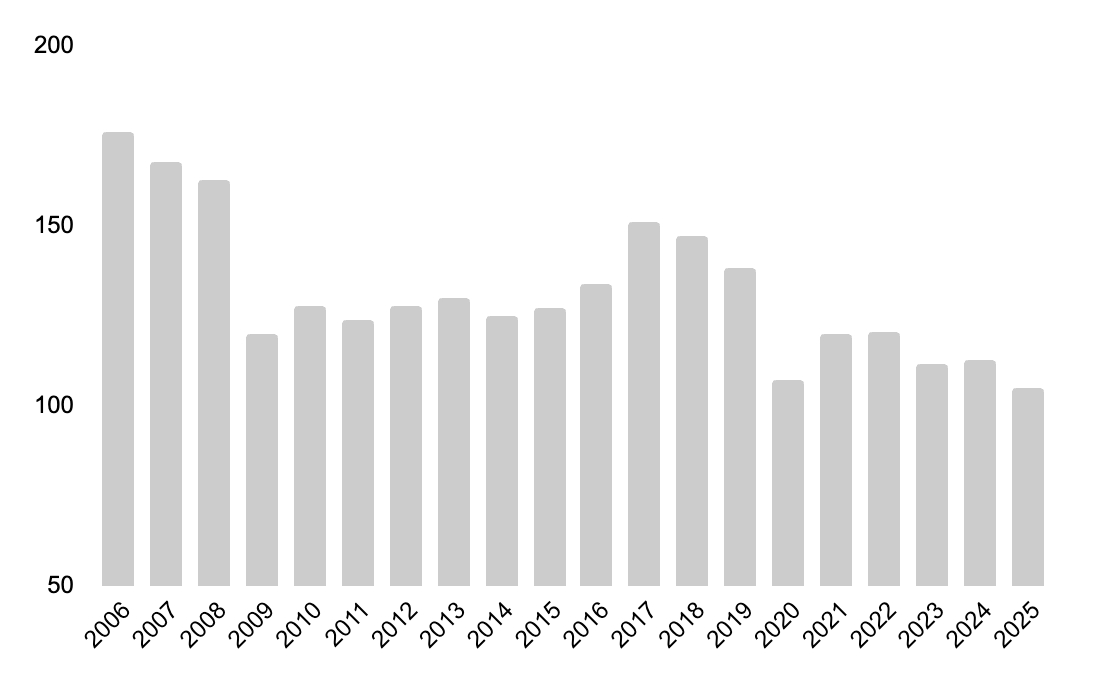
While producers have been making aggressive cuts, the midstream has also been unwinding the excessive inventory that built up following the mini-boom in 2022 and this has contributed to a continuing drop in rough diamond prices which are currently over 50% below post-covid levels.
How will this play out? There is almost certainly remaining inventory in the system, but the potential for a squeeze is increasing. There are early signs of recovering demand, and at some point scarcity will bite.
Mine closures are important in this, because unlike de-stocking they are largely irreversible over meaningful economic horizons. The thing about natural diamonds is that everything usually moves slowly, mines operate on long cycles, inventory moves slowly, and marketing operates over long time periods. But once supply has genuinely disappeared, the market may adjust much faster than expected.
It’s hard to spot the bottom in any market. Capitulation is short lived, and recovery is usually well underway before the headlines change. By the time consensus recognises a turning point, the underlying adjustment is often already well underway. Looking at the diamond market today the setup is there, and prices for some categories have already stabilised, indeed some of the best bargains may already have gone. Watch this space.